
Moderating the Conversations That Will Shape What Comes Next
Strategic-planning and budget conversations can be some of the most important—and most challenging—meetings of the year.
Participants arrive with competing priorities, strong opinions, limited time, and understandable pressure to advocate for their team, initiative, or budget. The result can be a conversation that drifts from stated goals, gives too much airtime to a few voices, or ends without clarity about what the group has actually decided.
That is where an effective moderator adds real value.
Your job is not simply to keep time or move from one agenda item to the next. You are there to help the group think clearly: to surface patterns, invite meaningful disagreement, connect ideas, and keep the conversation focused on the choices that matter.
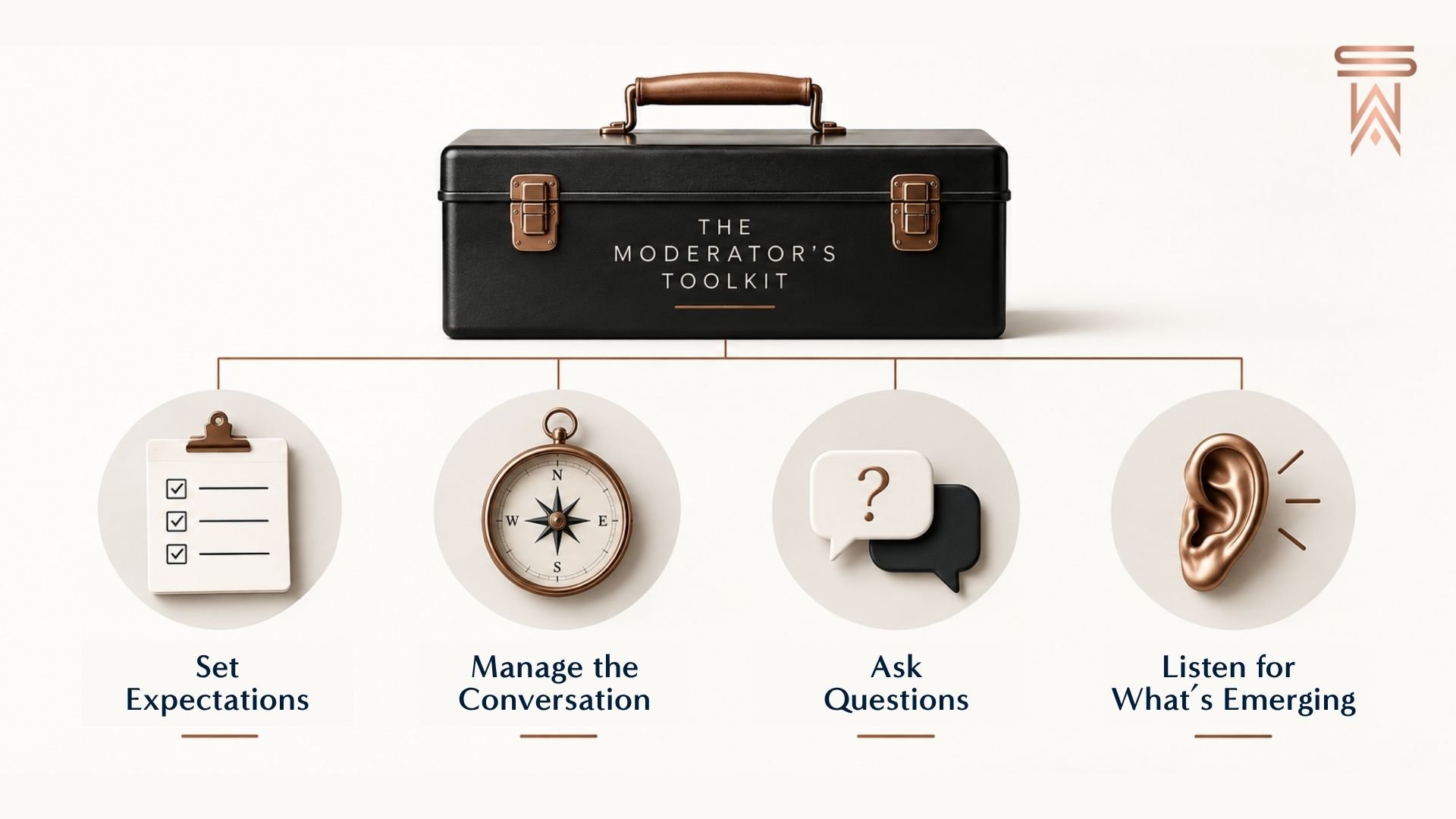
Here are four ways to do that well.
1. Set expectations before you get in the room
Strong moderation begins before the meeting starts.
As you connect with presenters, department leaders, consultants, or planning-team members, preview not only the agenda but also how the discussion will be facilitated. Clarify the time available for each presentation, the expected format or number of slides, and the importance of leaving room for group conversation. Just as important: let people know that you may step in to keep the meeting moving.
When participants understand in advance that you may redirect, pause a speaker, or invite other perspectives, those interventions feel like part of a fair process—not a personal interruption.
You might say:
“To make sure we have time for discussion and hear from everyone, I may step in to keep us moving or bring us back to the question at hand.”
That one sentence establishes your role and gives you permission to use it.
2. Be prepared to manage the conversation
You do not need to script every possible moment. But you should arrive with a few phrases you can use when the conversation needs a nudge, a pause, or a reset.
When someone is going too long, use their name first. It helps create the pause you need to redirect with clarity and respect:
“Alex, you’ve raised a few important points. I want to bring some other voices into the conversation.”
When you need to be more direct:
“Alex—I’m going to pause you there because I want to make sure we have time to hear from others.”
When the group gets lost in operational detail:
“Let’s zoom out for a moment. What does this mean for how we should be thinking about next year?”
When a few people dominate:
“We’ve heard a couple of perspectives. I’d love to bring some other voices into this.”
And when the discussion needs to come back to the purpose of the meeting:
“That’s an important point. For the purposes of today’s conversation, I want to bring us back to the decision we need to make.”
The goal is not to shut people down. It is to make room for the conversation the group actually needs to have.
3. Keep a few questions in your back pocket
In strategic planning and budget conversations, the most useful questions are often the ones that help people clarify, challenge, or connect what has already been said.
Keep several ready so you can use them naturally when discussion stalls, agreement comes too easily, or an important idea needs more attention:
“Can you say more about that?”
“Does anyone see it differently?”
“What might we be overlooking?”
“How does that build on what we just heard?”
“What would that actually look like in practice?”
“What does that mean for next year?”
“I’m hearing a theme around ___. Is that fair?”
These questions help move the group past reports and updates toward analysis, priorities, and decisions.
For example, if leaders agree that a new initiative is important, ask: “What would that actually look like in practice—and what would need to change in the budget to make it possible?”
If a department leader describes a pressing challenge, ask: “How does that build on what we heard from the prior team?”
If everyone seems aligned too quickly, ask: “Let me pressure-test that. What might we be overlooking?”
4. Listen for what is emerging
The strongest moderators do more than manage the agenda. They listen for patterns, tensions, and connections that can help the group make better decisions.
As the discussion unfolds, notice:
Where multiple people are naming the same concern in different language
Where a proposed investment supports—or conflicts with—another priority
Where people agree on a goal but disagree on the path to achieve it
Where a detail-oriented discussion is obscuring a bigger strategic choice
Where an unexpected or provocative comment deserves further exploration
Then name what you are hearing. For example:
“I’m hearing a theme around capacity. Is that fair?”
“It sounds as though we agree on the importance of growth, but we may have different assumptions about what we need to invest in first.”
“I want to stay there for a moment. Does anyone see that differently?”
This kind of synthesis helps the group feel heard while also moving the conversation toward shared understanding.
The Moderator’s Real Role
A successful planning or budget meeting is not one where you check every agenda item and see every slide. It is one where the right people have the right conversation—and leave with greater clarity about what matters most going forward.
As moderator, your role is to manage that conversation: listen for what is emerging, synthesize what you are hearing, redirect when needed, invite additional voices, and recognize when an interesting idea is worth exploring further. That is how you help turn a room full of updates into a clear, compelling strategic plan or a budget that genuinely reflects organizational values and priorities.
